




 DriveLock
The Core Principles of Endpoint Security and Why They Matter
In the high-stakes environments of modern manufacturing and healthcare, a single compromised node can disrupt life-saving services or halt global...









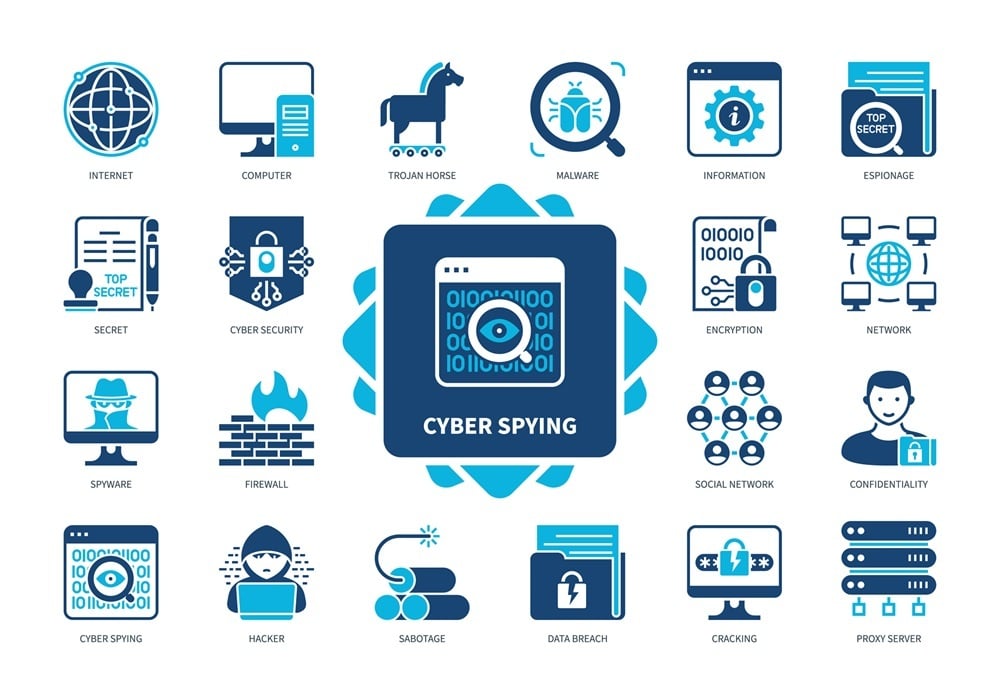
Defending against cyber espionage is a daily challenge for defense companies and KRITIS operators with far-reaching consequences. Digital intruders continuously attempt to steal sensitive defense data and design plans through sophisticated attack vectors. These targeted campaigns, often classified as Advanced Persistent Threats (APTs), use cyber sabotage as an escalation stage for extortion or destruction.
| CONTENT |
The human interface, especially via social engineering, remains a preferred attack vector for these complex operations. Effective defense therefore requires not only technology, but also a trained and vigilant workforce. This article analyzes the threat landscape and shows how you can comprehensively harden your organization.
Cyber espionage is the act of stealing sensitive information or intellectual property using digital methods without the owner's knowledge. In contrast, cyber sabotage aims to disrupt, damage or destroy the integrity, availability or functionality of systems.
While cyber spying steals information to gain a strategic advantage, cyber sabotage paralyzes systems to cause direct damage or chaos. These two tactics are often combined, with espionage providing the necessary information for effective later sabotage.
The primary objectives of these attacks are complex and range from economic to military to political interests. Cyber spying usually focuses on the theft of defense technologies, research and development results or sensitive customer data. Cyber sabotage targets critical operational processes, such as disrupting the power supply, paralyzing production facilities or disrupting the supply chain. In the healthcare sector in particular, this can lead to the manipulation of patient data or the shutdown of vital equipment.
Germany has one of the strongest economies in Europe, making it a highly attractive target for state-sponsored and criminal actors alike. The combination of globally leading industrial technology and a central geopolitical role in the EU and NATO explains the increased attention from hostile actors. The focus on cutting-edge technology and Germany's position as a key NATO partner puts the spotlight on the KRITIS sector and the defense industry in particular. Attackers are primarily interested in "Made in Germany" know-how, especially secrets in key industries such as the automotive industry, mechanical engineering and the chemical industry, in order to gain an economic or military advantage.
One of the main reasons for the high level of concern is the KRITIS Regulation: German KRITIS companies, including energy suppliers, waterworks and financial institutions, ensure elementary functions for society. A successful sabotage of these infrastructures would not only cause enormous economic damage, but also massively disrupt public order, making KRITIS a prime target for cyber sabotage. In addition, the German defense sector is experiencing a significant boost due to the special fund and the reorientation of the Bundeswehr, which greatly increases the interest of foreign intelligence services in defense technologies and strategic planning documents for cyber espionage.
It is estimated that thousands of German companies are affected by cyber attacks every year; studies show that in 2024 alone, over 70% of German companies were victims of cyber spying, sabotage or data theft. The high level of networking in the context of Industry 4.0 makes supply chains vulnerable to so-called supply chain attacks, in which a break-in at a small supplier is used as a bridge to a large defense company or KRITIS operator. This high impact results from the global relevance of German innovations, the deep digitalization of processes and the political importance of the country. Companies must therefore view the defense of their critical assets as a national duty.
Effective defense against targeted attacks requires a structured and multi-layered approach. To sustainably increase resilience to cyber espionage and sabotage, especially in the CRITIS and defense sectors, companies should consistently implement the following steps:
Identify the "crown jewels" and perform a risk analysis:
Conduct a comprehensive risk analysis to identify critical business processes and IT assets (the "crown jewels").
Determine the potential damage that would result from loss or sabotage of these business-critical data and systems.
Prioritize protective measures based on the criticality of the assets.
Consistently apply multi-factor authentication (MFA):
Implement MFA mandatorily for all user accounts, especially for remote access, administrative accounts and access to sensitive systems.
MFA makes it much more difficult for attackers to use compromised credentials for cyber spying.
Seamless patch and vulnerability management:
Ensure that all operating systems, applications and network devices are promptly updated with the latest security patches .
Regular scanning and closing of vulnerabilities reduces the attack surface that could be exploited for sabotage.
Comprehensive disaster recovery plan (DRP):
Create a detailed and documented disaster recovery plan that specifically addresses cyber sabotage scenarios.
This plan must include technical recovery steps (e.g. backups) and defined communication channels for internal teams and external stakeholders (authorities, customers).
Carry out regular tests of the DRP to validate its functionality under realistic conditions.
Combine preventive, detective and reactive measures:
Rely on a holistic security strategy that combines preventive(hardening), detective(monitoring/SIEM) and reactive(incident response) elements.
This combination ensures that attacks are not only prevented, but also quickly detected and contained before cyber sabotage causes full damage.
The threat of cyber espionage and sabotage represents an existential challenge for companies in sensitive sectors. Germany and Austria, as locations of KRITIS facilities and important defense companies, are particularly in the focus of digital attackers. These attacks are not only aimed at stealing secret information, but also at disrupting critical processes and destabilizing society, as the examples in the healthcare sector show.
To counter this threat, it is essential to implement robust security principles such as zero trust and comprehensive network segmentation. It is estimated that thousands of German companies fall victim every year, underlining the urgency of proactive measures. The most effective defense is based on a combination of technical hardening, consistent MFA usage and the regular updating of security strategies.
Organizations need to identify their most critical assets and have comprehensive contingency plans in place to respond quickly in the event of an emergency. IT security is not a one-off project, but an ongoing process that requires constant vigilance and adaptation.

In the high-stakes environments of modern manufacturing and healthcare, a single compromised node can disrupt life-saving services or halt global...

Daily email communication is essential for businesses and organizations, but it also carries significant risks. One of the biggest dangers is email...

In the fast-paced digital landscape, where seamless web experiences and robust security are paramount, organizations are constantly looking for ways...