




 DriveLock
1 min read
Cybersecurity Risk Assessment from A to Z
In our increasingly interconnected world, where data flows freely and digital landscapes expand at a breakneck pace, the need for robust...








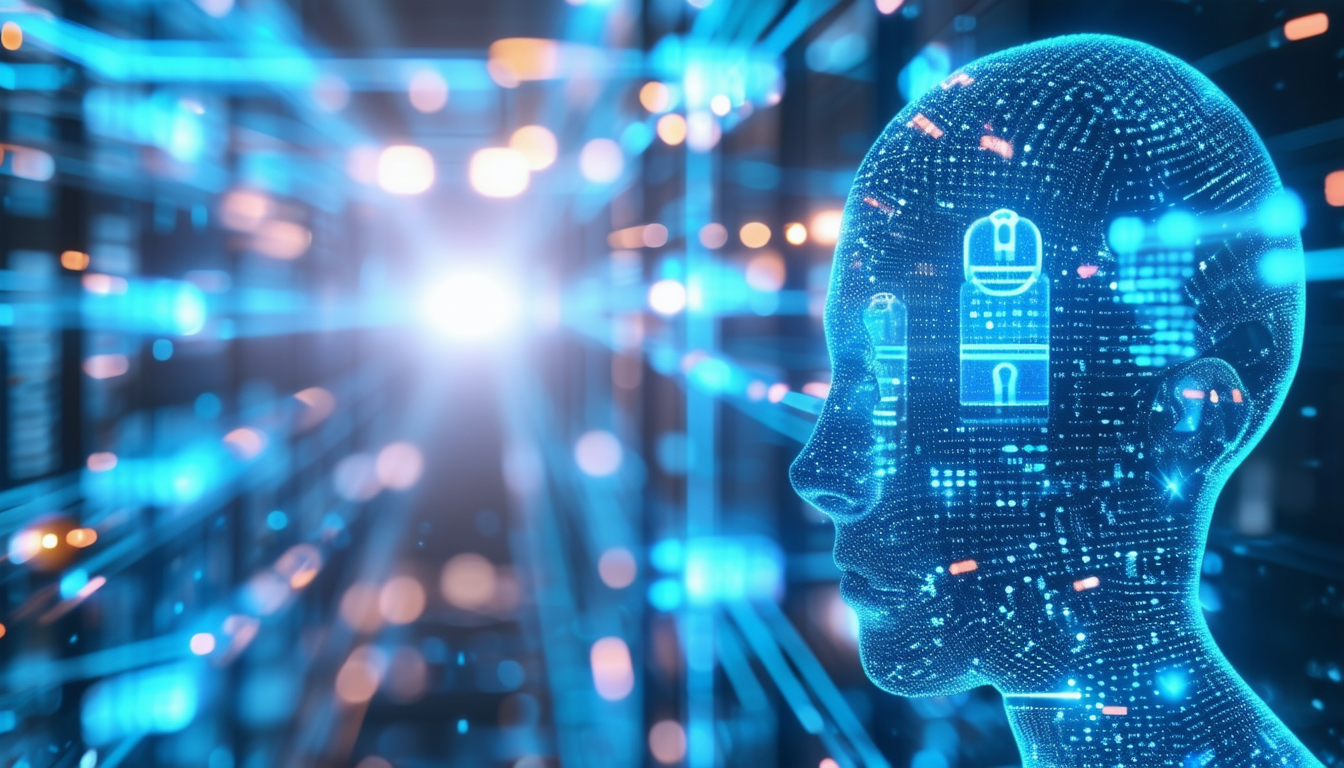
In the digital age, German enterprises are leveraging AI to bolster their cybersecurity measures, ensuring robust protection against evolving cyber threats.
In an era marked by rapid digital transformation, enterprises are increasingly recognizing the critical need for robust cybersecurity measures. The digital landscape is ever-evolving, and with it, the sophistication and frequency of cyber threats. From small businesses to large corporations, maintaining cybersecurity is no longer an optional investment but a necessity to protect sensitive data and ensure operational continuity.
With the introduction of stricter data protection regulations such as the GDPR and increasing regulatory pressure, many companies are facing the challenge of comprehensively securing their IT infrastructures. At the same time, customers and business partners are demanding a high level of transparency and security when handling sensitive data. In view of the growing threat of cyber attacks, cybersecurity is becoming not only a technical but also a strategic priority. Companies that invest in effective security solutions not only benefit from better protection, but also strengthen their market position and the trust of their stakeholders.
Faster Incident Response: AI-powered remediation dramatically reduces the time between threat detection and action. This rapid response capability minimizes potential breach impacts and limits the window of opportunity for attackers. By automating the remediation process, AI can initiate predefined actions based on incident categorization and severity, significantly accelerating incident response times.
Automated Threat Mitigation: AI-driven systems can immediately act on detected threats by:
Isolating affected systems
Blocking malicious traffic
Quarantining infected files
Rolling back compromised systems to a secure state.
This automation reduces the need for manual intervention, allowing security teams to focus on more complex tasks.
Enhanced Accuracy: AI algorithms can analyze the context and dependencies of each vulnerability, providing more accurate and tailored remediation recommendations. This capability helps organizations address the most critical issues first, ensuring a more effective approach to risk management.
Improved Efficiency:
Providing step-by-step remediation instructions tailored to specific environments
Automating patch deployment and configuration changes
Reducing the workload associated with manual vulnerability Management.
Continuous Improvement: AI-powered remediation systems continuously learn from new data, improving their accuracy in identifying vulnerabilities, attack vectors, and potential breaches over time. This adaptive approach ensures that organizations stay ahead of evolving threats and maintain a proactive security posture. By leveraging AI-powered remediation, organizations can significantly enhance their cybersecurity defenses, reduce response times, and minimize the impact of potential security incidents.
Artificial Intelligence (AI) is at the forefront of the cybersecurity revolution, fundamentally transforming how threats are detected and mitigated. Traditional methods often fall short in the face of sophisticated cyber-attacks. AI, with its ability to analyze vast amounts of data in real-time, offers a robust solution. It can identify patterns and anomalies that might be missed by human analysts, thus enhancing the speed and accuracy of threat detection.
Artificial Intelligence is transforming the landscape of threat detection and response in cybersecurity, ushering in a new era of digital defense. AI-powered systems are now acting as vigilant sentinels, leveraging advanced algorithms to process and analyze vast datasets with unprecedented speed and accuracy. This enhanced capability allows German enterprises to identify both familiar and emerging threats with remarkable precision, often detecting subtle signs of breaches that might elude traditional security measures.
The integration of AI has shifted the cybersecurity paradigm from reactive to proactive, employing predictive analytics to anticipate and neutralize potential threats before they materialize. Moreover, AI-driven automation is streamlining critical tasks such as vulnerability management, enabling cybersecurity professionals to focus on strategic initiatives. This revolution in threat detection and response is particularly crucial, where the cybersecurity market is projected to exceed €10 billion in 2024, growing at a remarkable 13% rate, reflecting the increasing awareness of cyber risks and the necessity for robust digital defenses in the face of sophisticated cyber attacks.
Furthermore, AI-driven systems can automate responses to identified threats, significantly reducing the time between detection and mitigation. This is particularly crucial in preventing breaches that could lead to significant data loss or operational disruptions. The integration of AI in cybersecurity not only improves efficiency but also allows security teams to focus on more strategic tasks, thereby optimizing resource allocation.
Several key AI technologies are driving innovations in the cybersecurity realm. Machine Learning (ML) algorithms, for instance, are being employed to predict potential threats based on historical data and current trends. These algorithms continuously learn and adapt, becoming more effective over time in identifying and neutralizing threats.
Deep Learning, a subset of ML, excels in processing complex patterns, enhancing threat detection capabilities for sophisticated attacks. Predictive Analytics leverages historical data to anticipate emerging threats, enabling proactive defense strategies. Behavioral Biometrics, another AI-driven innovation, continuously verifies user identities based on unique interaction patterns, strengthening access Management.
Natural Language Processing (NLP) is another critical technology, particularly useful in detecting phishing attacks. By analyzing the language and context of emails and messages, NLP can flag suspicious communications before they reach the intended recipient.
Additionally, AI-powered behavioral analytics can monitor user activities and detect deviations from normal behavior, providing an additional layer of security. These AI technologies collectively form a robust, adaptive security framework that significantly enhances an organization's ability to detect, prevent, and respond to cyber threats in real-time.
Four key sectors - public, healthcare, industrial, and legal - are implementing cutting-edge cybersecurity measures to protect their assets, maintain operational continuity, and preserve public trust in an era of persistent digital threats. By examining real-life applications and challenges in these industries, we gain valuable insights into the dynamic and crucial field of cybersecurity.
In the public sector, cybersecurity is paramount for protecting critical infrastructure and sensitive citizen data. For instance, when a Russian crime syndicate launched a coordinated ransomware attack against more than 20 Texas municipalities in 2021, it disrupted essential services. Police officers couldn't access digital records, cities struggled with payroll processing, and one municipality was forced to manually operate its water supply system for a week. This incident underscores the need for robust cybersecurity measures in government operations to maintain public services and protect sensitive information.
In the industrial sector, cybersecurity focuses on protecting operational technology (OT) and industrial control systems. Companies are adopting enhanced OT visibility solutions and software-based segmentation to secure their manufacturing networks. For example, some factories are implementing machine learning-based anomaly detection and industrial firewalls with deep packet inspection to provide real-time threat detection and automated incident response, ensuring the continuity and safety of production processes.
AI is revolutionizing cybersecurity in the healthcare industry, offering powerful tools to protect sensitive patient data and critical infrastructure. Machine learning algorithms analyze vast amounts of data to detect anomalies and potential threats, significantly reducing detection and response times by up to 60%. Predictive analytics help forecast and prevent potential security breaches before they occur, while natural language processing analyzes unstructured data to identify emerging threats specific to the healthcare sector. Additionally, AI aids in vulnerability management and regulatory compliance, helping healthcare providers stay aligned with stringent standards like HIPAA and GDPR.
Law firms and legal departments handle highly sensitive client information, making them attractive targets for cybercriminals. To combat this, many legal entities are implementing advanced protection technologies such as artificial intelligence and blockchain. These technologies enhance threat detection, create secure, unalterable records for legal files, and improve overall data protection. Additionally, law firms are adopting comprehensive risk assessment services and managed endpoint detection and response (EDR) solutions to fortify their defenses against evolving cyber threats.
AI-powered cybersecurity is poised to revolutionize digital defense across industries in the coming years. Advanced threat intelligence systems will leverage AI algorithms to analyze vast datasets, identifying and mitigating potential attacks with unprecedented accuracy. Autonomous security systems will emerge as a significant trend, working independently to detect and respond to cyberattacks without human intervention. AI-driven behavioral analytics will enhance user authentication and anomaly detection, while machine learning models will improve threat detection capabilities.
In the public sector, AI will play a crucial role in protecting critical infrastructure and sensitive citizen data. Government agencies are expected to deploy AI for improved security resilience, leveraging it to address larger cybersecurity needs and enhance constituent services.
Healthcare organizations will benefit from AI-powered threat detection systems to safeguard electronic health records and medical devices, ensuring compliance with data protection laws and regulations like HIPAA.
The industrial sector will see increased adoption of AI for protecting operational technology and industrial control systems, implementing machine learning-based anomaly detection and industrial firewalls with deep packet inspection3.
In the legal industry, AI will enhance threat detection, create secure, unalterable records for legal files, and improve overall data protection, helping law firms combat sophisticated cyber threats targeting sensitive client information.
As these trends unfold, organizations across sectors must remain vigilant, continuously adapting their cybersecurity strategies to leverage AI's potential while addressing the evolving threat landscape.
DriveLock helps companies to use AI securely - with transparency, control and clear security boundaries. Learn more now:


1 min read
In our increasingly interconnected world, where data flows freely and digital landscapes expand at a breakneck pace, the need for robust...
1 min read
As we step into the digital frontier of 2024, the landscape of cybersecurity continues to evolve at an unprecedented pace. With each passing year, ...
1 min read
In this relentless digital battlefield, businesses and organizations are pitted against a multitude of adversaries ranging from individual hackers...