




 DriveLock
1 min read
Why Does Every Industrial Company Need a Security Operations Center?
Protecting sensitive data is no longer just an IT task, but the foundation for patient trust in the healthcare sector and operational safety in...








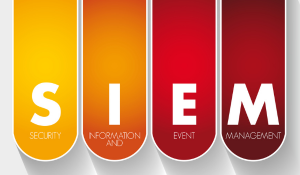
Today more than ever, more and more companies and public offices require powerful security measures to effectively counter the numerous cyber security threats. In view of these challenges, one key tool is becoming increasingly important: Security Information and Event Management, or SIEM for short.
| TABLE OF CONTENT |
In this article, we would like to give you an in-depth insight into the world of SIEM. We will explain how it works and its central importance for the current cyber security landscape. Join us on this exploratory tour!
But to understand the role of SIEM, we first need to look at the architectural framework it monitors. A common question for IT professionals and stakeholders alike is: what are 7 layers of cybersecurity?
Mission-Critical Assets (The Core): This is the data you are protecting—customer records, intellectual property, and financial info.
Data Security: Encryption and backup measures that protect the data itself.
Application Security: Firewalls and coding practices that protect the software used to access data.
Endpoint Security: Protecting the individual devices (PCs, laptops, mobile phones) that connect to the network.
Network Security: Controlling the flow of data through routers, switches, and network-level firewalls.
Perimeter Security: The digital "fence" around your business, including VPNs and edge protection.
The Human Layer: Security awareness and policies that prevent social engineering and user error.
While each of these layers has its own specialized defenses (like antivirus for endpoints or firewalls for the network), they often operate in "silos." They see what is happening in their own backyard, but they don't talk to each other. SIEM acts as the overarching intelligence layer. It applies to all 7 layers by:
Centralizing Logs: It pulls data from your perimeter firewalls, your endpoint sensors, and your application logs into one single pane of glass.
Correlating Events: A SIEM can spot a "low and slow" attack. For example, it can see a failed login on the Human Layer (Layer 7) followed by an unusual data export at the Network Layer (Layer 5) and flag it as a single, coordinated breach.
Real-Time Visibility: By monitoring all 7 layers simultaneously, SIEM ensures that security teams aren't just collecting data, but are gaining actionable insights to stop threats before they reach the core mission-critical assets.
SIEM stands for Security Information and Event Management Information and it's about collecting, aggregating, correlating and analysing security information and event data from various sources in real time.
The main goal of SIEM is to detect and respond to security incidents, minimise threats and meet compliance requirements at the same time. SIEM systems play a crucial role in proactively monitoring and managing the security infrastructure of organisations. It has 3 primary types:
Self-Managed (On-Premises) SIEM: This traditional model involves installing the SIEM software on internal hardware managed entirely by your own IT team. It provides maximum control over sensitive data but requires a significant investment in physical infrastructure and dedicated staff for maintenance.
Cloud-Managed SIEM (SaaS): Delivered as Software-as-a-Service, this SIEM type is hosted in the cloud, eliminating the need for your company to manage servers or storage. It offers rapid scalability and reduced overhead, making it ideal for hybrid environments and growing businesses.
Managed SIEM (MSSP): In this fully outsourced model, a third-party provider supplies the SIEM platform and monitors it for you $24/7$. It is the most efficient option for organizations that need professional security oversight without the high cost of hiring an internal expert team.
Imagine having a security guard who never sleeps, constantly monitoring your entire IT infrastructure for suspicious activity—that’s what SIEM (Security Information and Event Management) technology does. It collects logs and security data from across an organization’s network, analyzes it for unusual patterns, and alerts teams when something seems off.
By centralizing security monitoring, SIEM helps businesses quickly detect cyber threats, investigate incidents, and stay compliant with regulations. Whether it’s spotting an attempted data breach or flagging unauthorized access, SIEM acts as an early warning system to keep organizations protected.
Understanding the distinct roles of SIEM and endpoint security is crucial. While both are vital for a robust defense, they address different aspects of security monitoring and response. Let's clarify the key differences to help you optimize your security posture. Here's a breakdown of the core distinctions between these essential tools:
| SIEM | Endpoint Security | |
| Scope of Monitoring | Aggregates and analyzes logs and events from across the entire IT infrastructure, including servers, network devices, applications, and endpoints. It provides a holistic view of security incidents and anomalies. | Focuses specifically on individual devices (endpoints) like laptops, desktops, and mobile devices, monitoring for malicious activity and vulnerabilities on those specific devices. |
| Detection Approach | Relies on correlation rules, anomaly detection, and threat intelligence to identify complex attacks that span multiple systems. It excels at detecting patterns and trends over time. | Employs signature-based detection, behavioral analysis, and machine learning to identify and block known and unknown malware, exploits, and other threats directly on the endpoint. |
| Response Capabilities | Primarily provides alerting and reporting, enabling security teams to investigate and respond to incidents. It often integrates with other security tools for automated response actions. | Offers active threat prevention and remediation capabilities, such as blocking malicious processes, quarantining infected files, and isolating compromised endpoints. |
| Data Focus | Deals with large volumes of log data and security events, providing a centralized platform for security analytics and compliance reporting. | Centers on real-time monitoring of endpoint activity and file integrity, focusing on immediate threat detection and prevention. |
SIEM systems are crucial for proactively monitoring and securing IT infrastructures. They support companies in recognising security incidents at an early stage, reacting to them and continuously improving their security strategies.
Modern SIEM solutions go beyond log management by integrating with other cybersecurity technologies to enhance threat detection and response. Features such as Security Orchestration, Automation, and Response (SOAR) and User and Entity Behavior Analytics (UEBA) allow SIEM to detect advanced threats more effectively. By automating incident response and correlating data from multiple security layers, SIEM reduces the workload on security teams and improves their ability to mitigate risks efficiently.
Security Information and Event Management (SIEM) systems play a crucial role in modern cybersecurity strategies, offering a centralized platform for monitoring and managing security events across an organization's IT infrastructure. While SIEM solutions provide numerous advantages, they also present certain challenges that organizations must address to fully leverage their benefits.
In conclusion, it is clear that Security Information and Event Management (SIEM) is more than just a security tool - it is a critical component of any comprehensive cyber security strategy.
As cyber threats continue to evolve, SIEM is also advancing with the adoption of artificial intelligence and cloud-based architectures. AI-powered SIEM solutions improve threat detection accuracy by learning from past incidents and adapting to new attack patterns. Additionally, cloud-based SIEM offers scalability and flexibility, making it easier for businesses of all sizes to deploy and manage security operations. Investing in a robust SIEM solution is essential for organizations looking to enhance their cybersecurity defenses and protect sensitive data from emerging threats.
As cyber threats continue to grow in complexity, implementing a robust SIEM solution is essential for any organization looking to strengthen its cybersecurity defenses. While traditional SIEM systems required significant resources to manage, modern cloud-based and AI-powered solutions have made SIEM more accessible and effective. By leveraging SIEM technology, businesses can gain greater visibility into their networks, detect threats faster, and maintain compliance with industry regulations, ultimately safeguarding their digital assets from ever-evolving cyber risks.
The constant evolution of the technology landscape and the increasing sophistication of cyber attacks make the implementation of SIEM a wise investment. Get to know DriveLock's Security Event Manager.
The Security Event Manager safeguards sensitive data and preserves system integrity while ensuring compliance with strict industry regulations. By securing data and confidential information, it helps meet compliance standards and build trust.

1 min read
Protecting sensitive data is no longer just an IT task, but the foundation for patient trust in the healthcare sector and operational safety in...
1 min read
In the current age of digitalization, companies across various sectors and sizes face a growing risk of cyber attacks. Despite implementing...
1 min read
In the high-stakes environments of modern manufacturing and healthcare, a single compromised node can disrupt life-saving services or halt global...